JN is offering reporting grants to journalists in range countries in Africa* to support the production of in-depth stories on threats faced by great apes, particularly the impact of disease and other health considerations, as well as conservation strategies to protect these species and their habitats.
Please read the following sections carefully, as they contain important information on eligibility and the application process.
Overview
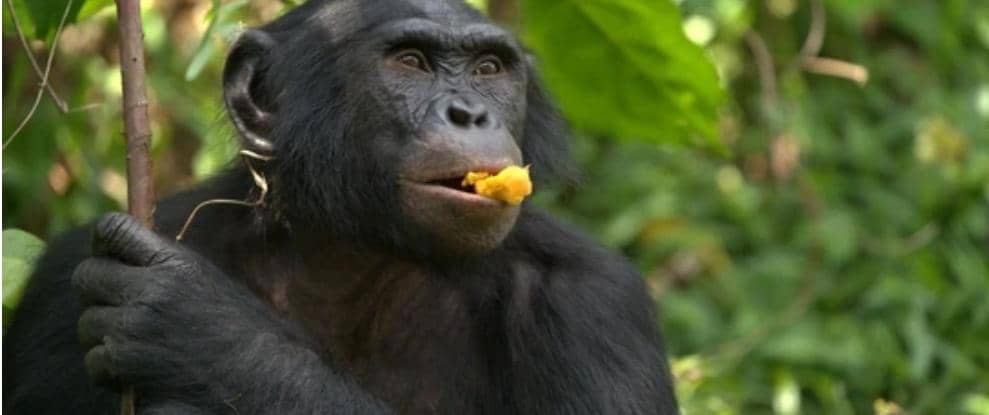
All great ape species—gorilla, chimpanzee, bonobo and orangutan—are Endangered or Critically Endangered, while nearly all gibbon species are at risk of extinction. With humans and great apes sharing nearly identical genomes and evolutionary history, scientists have warned that if this planet becomes a place where non-human primates can’t survive, humans soon won’t be able to survive either.
But we’ve seen targeted conservation efforts for the mountain gorilla in particular find success, with research demonstrating that it is the only great ape species increasing in number because the entire population lives within protected areas. However, grave threats remain for them and other great apes: disease driven by habitat fragmentation and crowding, human-animal conflict and the wildlife trade, both legal and illegal are just some of the challenges they face. The risk of zoonotic spillover due to human and great apes coming into closer contact is also increasing.
As part of EJN’s new project, Empowering Media for the Conservation of Great Apes in Africa, we will award up to 8 story grants to journalists in African range countries* (see Eligibility) seeking to report on the threats faced by great apes (in the wild and in captivity), and the conservation solutions that must be scaled to safeguard animal, human and environmental health in the years to come. This project is supported by the Arcus Foundation.
Story themes
We welcome story ideas that focus on the following themes, including, but not limited to:
- The diseases threatening both wild and captive apes, with particular focus on how tourism, industrial development, natural disasters, trafficking, trade and research activity impact ape health;
- Zoonotic spillover and One Health at the human-ape interface, i.e. stories that connect the dots between human health, animal health and environmental health;
- Participatory and science-based conservation efforts and other tried-and-tested solutions to safeguard great ape health and welfare;
- Ethical interventions to monitor and manage ape health in areas where humans and great apes successfully coexist;
- National and international laws, policies and treaties related to great ape conservation—and the challenges in implementing them;
- The role of protected areas, national parks and other reserves in mitigating risks to ape wellbeing, preserving ecosystems and supporting human health;
- How Indigenous and traditional knowledge is or is not incorporated into management plans and how communities are consulted about conservation initiatives that may affect their livelihoods and cultural traditions;
- The balance between the need for resources to support a clean energy transition and the impact of extractive industries such as mining on ape habitats.
We aim to support the production of stories that raise awareness about great apes and One Health and drive conversation among communities and policymakers at the local, national, and regional level. Proposals that focus on topics or stories that have not been widely covered are preferred. Issues that have already received a lot of media coverage or don’t provide unique angles are less likely to be selected.
We are particularly interested in stories with a cross-border element, including groups of journalists seeking to investigate the uniquely challenging threats to ape populations that live in multiple countries or conservation initiatives that require regional cooperation.
Eligibility
*Applicants can be from range countries in Africa; i.e. countries where the great apes live in their natural habitats: Angola, Burundi, Cameroon, Central African Republic, the Democratic Republic of the Congo, Republic of the Congo, Cote d’Ivoire, Equatorial Guinea, Gabon, Ghana, Guinea, Guinea-Bissau, Liberia, Mali, Nigeria, Rwanda, Senegal, Sierra Leone, South Sudan, Tanzania and Uganda.
For the purposes of this opportunity, we will only be accepting applications in English and French. Unfortunately, we do not have the capacity to consider applications in other languages at this time.
Groups of journalists are encouraged to apply. However, the application must be made in the name of one lead applicant. Lead applicants are responsible for communicating with EJN and receiving funds on the group’s behalf, if awarded.
Applications are open to journalists working in any medium (online, print, television, radio) and other media practitioners with experience covering conservation and/or One Health issues.
We welcome applications from early-career journalists and experienced reporters with a track record of covering conservation and One Health issues. Applications from freelance reporters and staff from all types of media organizations—international, national, local and community-based are eligible. We especially encourage women, rural and/or Indigenous and early-career journalists to apply.
We welcome applications from freelance reporters and staff from all types of media organizations—community-based, local national and international. The grant can fund travel costs, reporter stipends, multimedia elements and more. Besides funding, grantees will receive 1-1 editorial mentorship from an experienced journalist and training on how to repackage their reporting for social media to reach a wider audience.
Applicants are required to be transparent about the use of generative AI tools, if any, to revise their proposals. EJN reserves the right to disqualify applicants from consideration if they have been found to have engaged in unethical or improper professional conduct, including, but not limited to, submitting AI-generated content as their own.
Note: For the purposes of this grant opportunity, we are unable to accept letters of support from Mongabay because they are already a beneficiary of the Arcus Foundation, who is also supporting this program. Applicants are encouraged to seek support from other media outlets (international, national, local and community-based) in any medium (online, print, television, radio).
Story logistics
We expect to award up to 8 grants with budgets of up to US$1,500 each.
We plan to issue grants in June with the expectation that all stories will be published by October 31, 2025, at the latest. Applicants should consider this timeline when drafting their workplan.
Safety: We encourage reporters to follow best practices for Covid-19 and other public health concerns when out in the field so you do not endanger yourself or the people you’re interviewing. If needed, you should include any health-related costs, such as tests or personal protective equipment, in your budget.
Language of publication: Stories can be produced in any language. However, applicants who intend to write or produce stories in their local language need to also include an English translation. Please include the cost for translation in the budget, if necessary.
Story budget: All applicants are required to provide a detailed budget with justification for the amount requested using the template provided below. We ask that the budgets be reasonable and account for costs necessary for reporting, such as travel and accommodation. Please also note on your budget form if you are receiving funding from any other donors for the story.
Generally speaking, applications with smaller budgets will be more competitive, but we will consider larger grant amounts for stories using innovative, collaborative or investigative approaches that may be more resource-intensive and time-consuming.
We expect that proposals will largely reflect what equipment the applicant already has access to (including cameras, drones, lighting, tripods, etc.) and will not consider budgets that heavily focus on procuring new equipment.
We will consider a stipend for the reporters’ salary, particularly if the applicant is a freelancer. Please estimate the time you’ll need to complete this story and propose compensation you believe reflects a fair market rate. We ask, however, that this comprises no more than 30% of the total budget.
Acknowledgement of EJN support: Published stories and/or broadcasts must disclose EJN support by including this tagline: “This story was produced with support from Internews’ Earth Journalism Network.”
Republication rights: Those who are awarded grants are free to publish or broadcast their stories first in their affiliated media as long as Internews’ EJN, its partners and the grant funder, Arcus Foundation, are also given rights to edit, publish, broadcast and distribute them freely.
Judging criteria
Applicants should consider the following points when devising their story proposals.
Geographical and species diversity: We will select a cohort that is representative of as many range countries and great ape species as possible.
Relevance: Does the proposal meet the criteria and objectives of the call? Why does this story matter and to whom? Is the main idea, context and overall value to the target audience clearly defined?
Angle: If the story has been covered, does your proposal bring new insights to the topic or offer a fresh angle?
Reach: Does the proposed media outlet have a wide reach? Journalists publishing their work at outlets that typically restrict content behind paywalls are encouraged to secure commitments to publish from additional outlets, or request an exception to ensure their EJN-supported story remains accessible to audiences.
Impact: Does the proposal have a compelling narrative or investigative element that will inform and engage, draw attention, trigger debate and spur action?
Innovative storytelling: The use of creative approaches, multimedia and data visualization will be considered a plus.
Representation of great apes in anticipated coverage: We will consider whether journalists’ proposals to report on great apes adhere to the IUCN’s Best Practice Guidelines for Responsible Images of Nonhuman Primates and uphold media ethics in this area.
Plan for timely publication: Reporters, whether freelance or employed at a media outlet, will need to include a letter of support from an editor in their application, committing to publish the stories by October 31, 2025.
Application process
- Click the ‘Apply now’ button at the top of the page.
- If you have an existing account, you’ll need to log in. Since we recently updated our website, you might have to reset your password by clicking the “Forgot password?” link in the log in page. If you don’t have an account, you must register by clicking “Log in” on the top right of the page and click the “Sign up” link at the bottom of the page that opens. Click here for detailed instructions on how to create an account, and here for detailed instructions on how to reset your password.
- If you start the application and want to come back and complete it later, you can click ‘Save Draft.’ To return to the draft, you’ll need to go back to the opportunity and click ‘Apply now’ again to finalize the application.
- Applications should provide a detailed budget in an Excel spreadsheet with justification for the amount requested. Download the budget template now by clicking on this link.
- All applicants are asked to provide a signed letter of support from their editor, explicitly stating that the media outlet will publish the stories produced as a result of this grant.
- Applicants will also need to submit two samples of stories or links to relevant work.
If you encounter difficulties with submitting your application or have questions about the grants, please email info.ejn@internews.org. Do not contact any other Internews email regarding this opportunity, as we will not receive it.
Applications submitted after the deadline will not be considered.
Application Deadline
June 4, 2025, 11:59 PM (Africa/Dar_es_Salaam)
Accepted languages for Applications
English, French
Application closed
About The Author